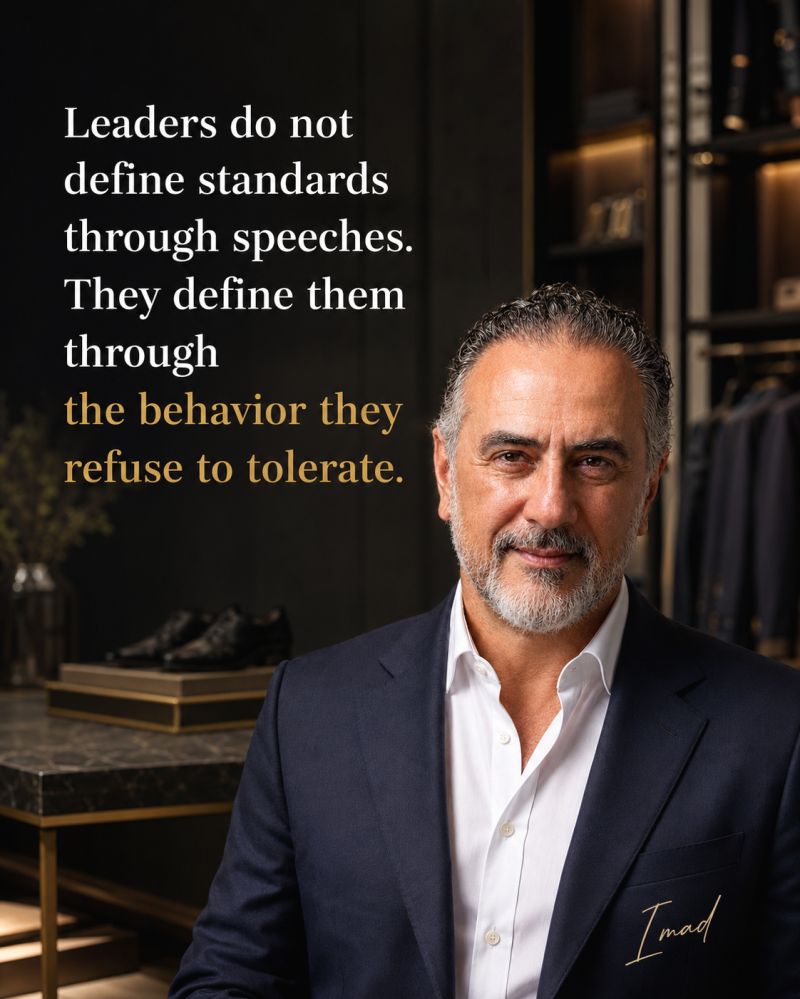
Employees pay close attention to the difference between what leadership says and what leadership does. They notice when poor customer service is discussed but never corrected. They notice when deadlines are treated as important for some people and optional for others. They...
A leader can speak about standards every morning, but the team learns the real standard by watching what the leader allows to continue.
Employees pay close attention to the difference between what leadership says and what leadership does.
They notice when poor customer service is discussed but never corrected. They notice when deadlines are treated as important for some people and optional for others. They notice when strong performers are expected to carry more responsibility while repeated underperformance is excused.
Over time, what leadership tolerates becomes more influential than what leadership communicates. This is how standards gradually decline.
It rarely happens because the organization officially decided to accept less. It happens because small exceptions are repeated until they become normal, difficult conversations are postponed, and people realize that there is no consequence for ignoring expectations. The impact is not limited to weaker performers.
The strongest employees are usually the first to recognize inconsistency. When they see that effort, accountability, and discipline are not treated fairly, they begin questioning whether maintaining a higher standard is worth it.
Leadership credibility is built when words and actions remain consistent, particularly when addressing uncomfortable situations. Correcting poor behavior is not about creating fear. It is about protecting the people who continue doing the right thing and preserving the standard customers were promised.
Culture is not defined by the values displayed in an office or repeated during meetings. It is defined by the behavior that is rewarded, the behavior that is corrected, and the behavior everyone learns they can get away with.
What has a greater influence on culture in your experience: what leaders communicate or what they tolerate?
#Leadership #WorkplaceCulture #RetailManagement #LuxuryRetail