A delayed delivery, an incorrect product, a missed commitment, or a breakdown in communication can happen in any business. Customers understand that mistakes are possible, even when dealing with a premium or luxury brand. What they find much harder to accept is indifference. The...
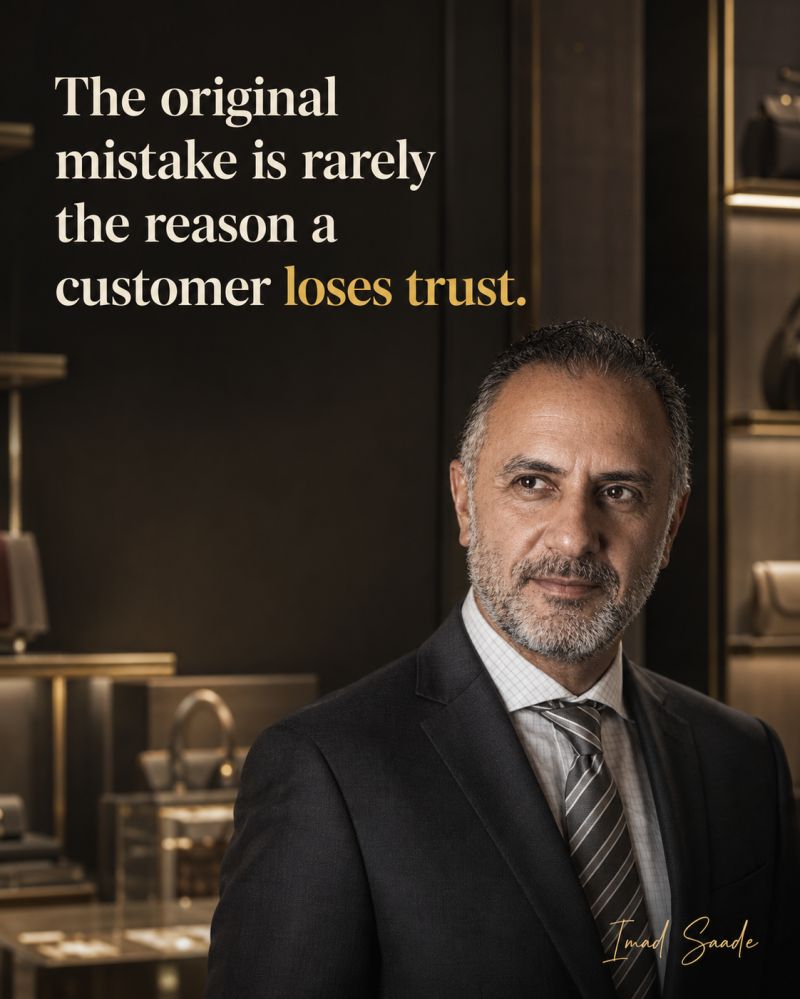
By the time a customer asks to speak with senior management, the original mistake is often no longer the main problem.
A delayed delivery, an incorrect product, a missed commitment, or a breakdown in communication can happen in any business. Customers understand that mistakes are possible, even when dealing with a premium or luxury brand. What they find much harder to accept is indifference.
The situation becomes serious when the customer has already explained the issue several times, followed up repeatedly, received conflicting answers, or been transferred between departments without anyone taking responsibility.
At that point, the customer is no longer frustrated only by what went wrong. They are reacting to how the business made them feel while they were trying to resolve it. This is why service recovery cannot depend entirely on senior management. If every meaningful complaint must reach the top before someone is willing to act, the business does not have an escalation process. It has an ownership problem.
Frontline employees need enough authority to solve reasonable problems, managers need to remain accessible when support is required, and every person involved must understand that passing the customer to someone else does not remove responsibility.
The strongest service recovery is usually not dramatic. It begins when one person listens carefully, acknowledges what happened, explains what will be done, and remains accountable until it is resolved.
Customers can forgive a mistake when they see genuine ownership. What damages trust is being made to feel that nobody cares enough to solve it.
When a complaint reaches senior management in your business, do you investigate only the original mistake, or do you also examine everything the customer experienced afterward?
#CustomerExperience #ServiceRecovery #RetailLeadership #LuxuryRetail