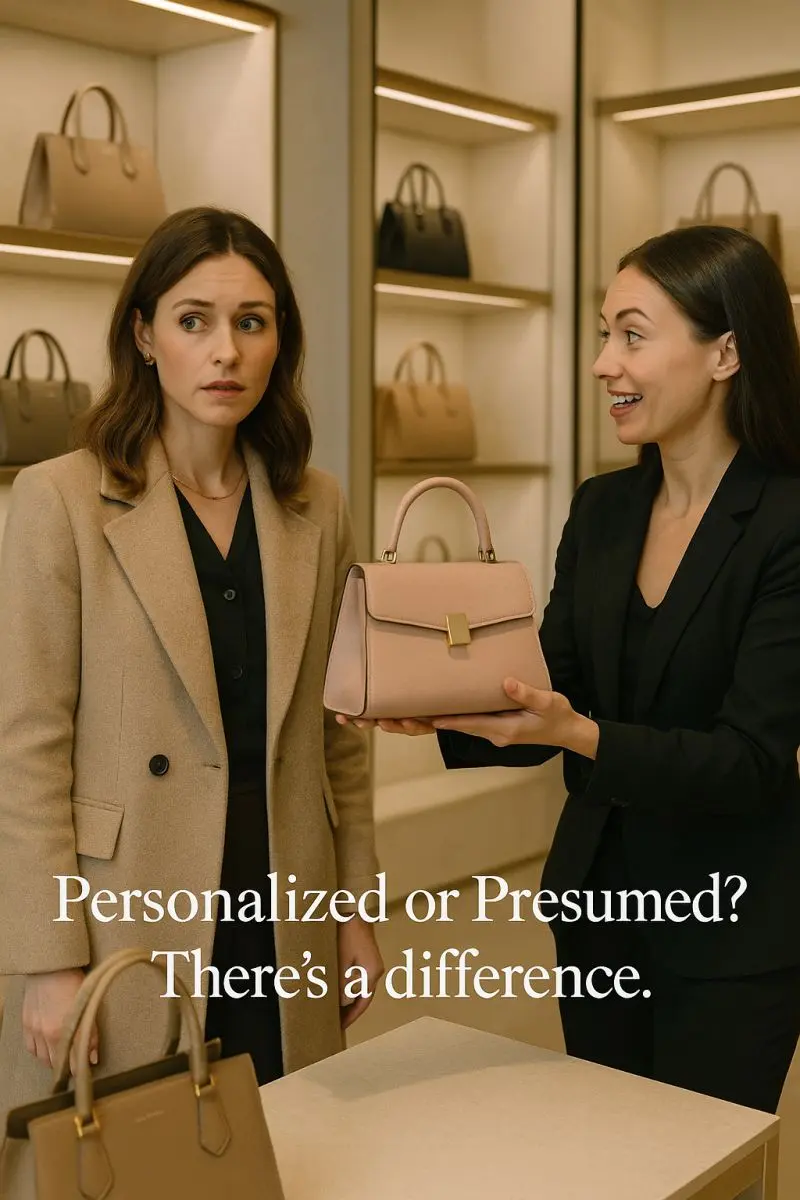
In luxury retail, personalization can elevate or alienate. The line between service and surveillance is thinner than ever. Luxury thrives on intimacy, knowing a client’s preferences, size, favorite designer, or how they take their espresso. But what happens when personalization...
Personalization vs. Privacy: Where Do We Draw the Line?
In luxury retail, personalization can elevate or alienate. The line between service and surveillance is thinner than ever.
Luxury thrives on intimacy, knowing a client’s preferences, size, favorite designer, or how they take their espresso. But what happens when personalization feels invasive?
Recent research by McKinsey shows that: 71% of consumers expect personalized experiences. 76% feel uncomfortable when brands seem to know too much.
In luxury, we celebrate CRM tools, digital wishlists, WhatsApp clienteling, and personalized invites. But we rarely talk about the discomfort some clients feel when approached with hyper-specific details they never explicitly shared.
I’ve seen both sides: • A boutique client thrilled to receive a private call the moment a rare size 38 coat arrived. • Another asking how the brand knew she had just relocated, when she never gave that information.
The difference? Consent and context.
It’s not about having the data, it’s about using it thoughtfully. - Did the client opt in? - Is the communication human, or scripted? - Are we enhancing the experience, or showing off what we know?
As regulations tighten in the UAE, KSA, and Europe, brands must move from data-driven to relationship-driven.
Where do you draw the line between helpful and intrusive? Have you seen personalization backfire, or create unexpected magic?
#LuxuryRetail #Personalization #Clienteling #CustomerExperience #CRM